


Lately I'm deep in AI-native engineering: coding agents, multi-agent systems, agent harnesses, and the verification layer that makes AI reliable enough for real engineering work, not demos.
I like staying close to the code. I've architected distributed systems on GCP, Alibaba Cloud, and AWS, run self-hosted infra, built backends in Go and Node, shipped frontends in React and React Native, and led engineering teams through recovery, compliance audits, and greenlight-to-production speedruns. I've also built AI agent infra from scratch: realtime voice, RAG, memory, tool calling, subagents.
Right now I'm building the two projects below.
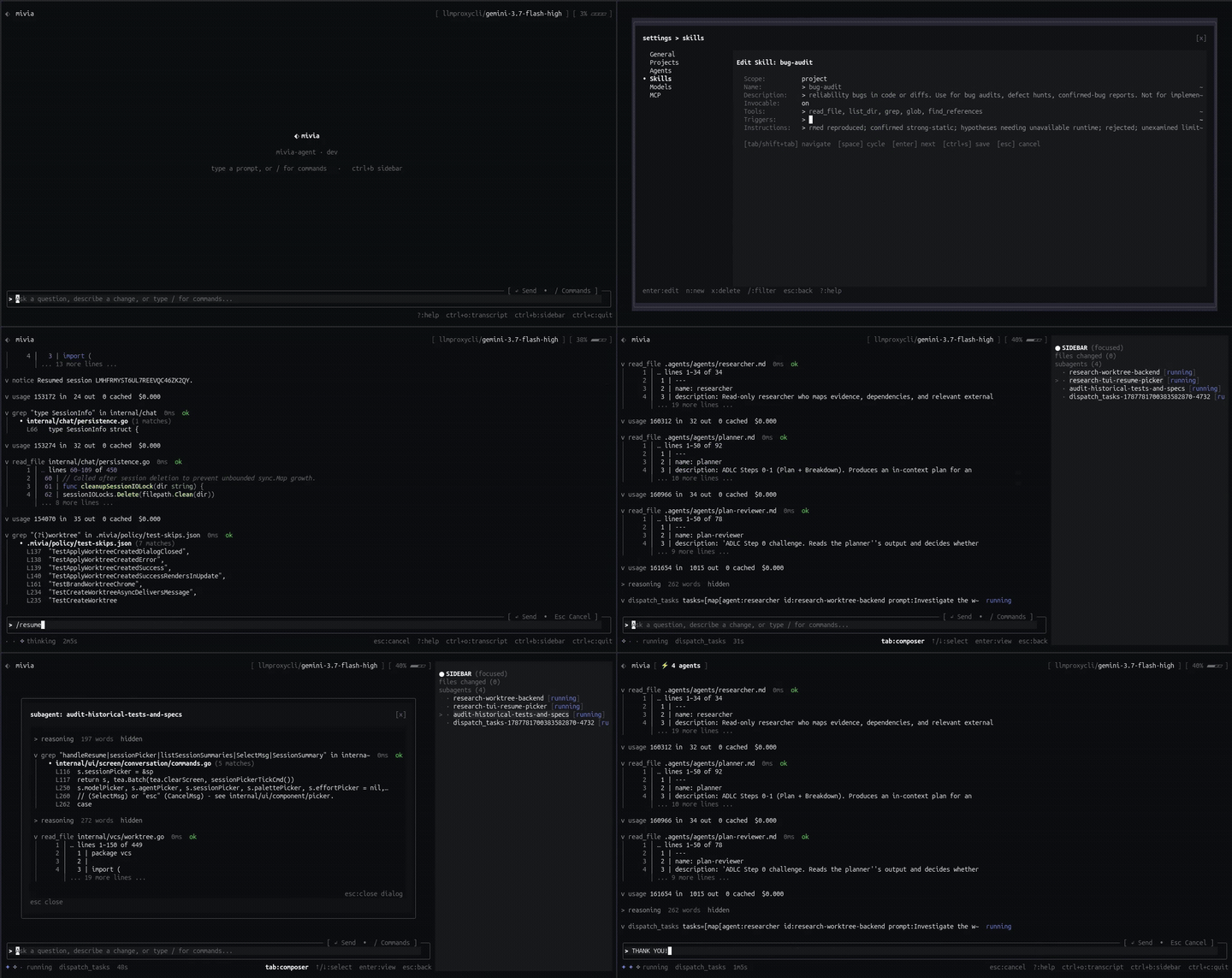
A terminal coding agent that actually ships code. It reads, searches, and edits your repo, runs your test suite, and drives multi-step workflows in an isolated worktree with a durable run record for every step. Local-first and provider-agnostic: your files stay on your machine, and you bring the model.
A Go SDK for building reliable AI agents and multi-agent workflows out of composable, single-concern blocks. Ed25519-signed envelopes, durable task execution with fenced takeover, deterministic step graphs, and native MCP/A2A protocol support. Standard library only, no dependency surface to audit.
Node.js projects:
mivialabs-nestjs-boilerplate — NestJS API boilerplate with event sourcing: PostgreSQL, Redis, RabbitMQ, MinIO.
flip-shop-task — Two dockerized microservices, two MongoDB instances, Redis, and NATS for inter-service messaging.
mysmarthotel-task — NestJS API and a background worker talking over RabbitMQ, backed by MongoDB.